
Introduction
Let me guess—you've spent the last three hours comparing server platforms, and now your browser has 47 tabs open. Each provider promises "enterprise-grade performance" and "seamless scalability," but you're more confused than when you started.
Here's the truth nobody tells you: the most powerful server platform isn't always the one with the longest feature list. It's the one that actually matches your workflow, doesn't require a PhD to configure, and scales when you need it to—without burning through your budget or your sanity.
After deploying hundreds of applications across different infrastructures, I've learned that "easy" and "powerful" aren't opposites. The best server platforms deliver both, and choosing the right one can mean the difference between shipping your product next week or getting lost in configuration hell for the next three months.
What Makes a Server Platform Actually Powerful?
Before we dive into specific platforms, let's clear up a common misconception. Power isn't just about raw compute specs or how many regions a provider operates in.
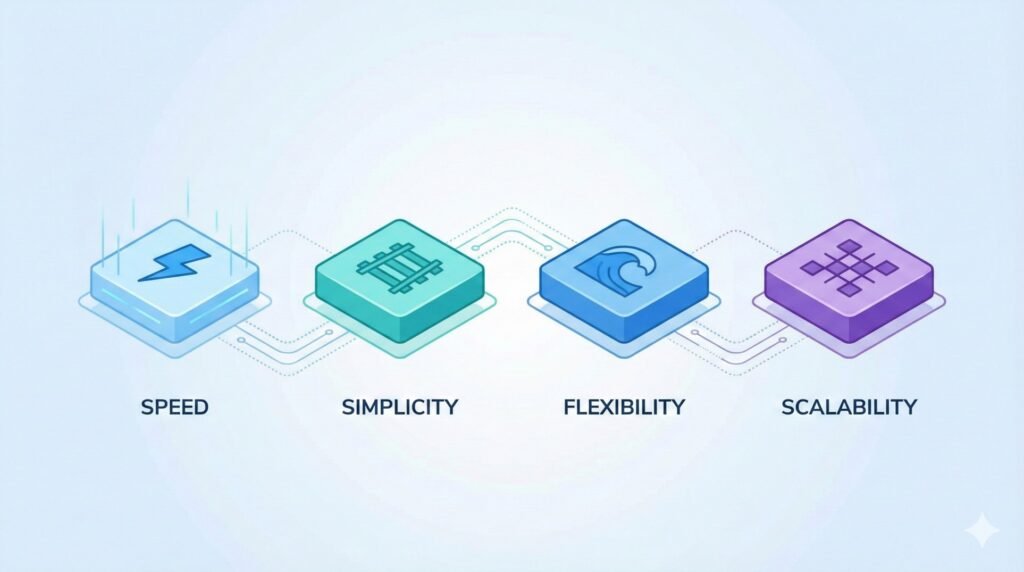
Real power comes from three things:
- Speed to deployment – Can you go from idea to live application in hours, not weeks?
- Intelligent automation – Does the platform handle the tedious stuff so you can focus on building?
- Scalability without complexity – Can your infrastructure grow without requiring a complete rewrite?
Think about it this way: a Formula 1 car is incredibly powerful, but if you can't drive it out of your garage, what's the point? Your server platform should amplify your capabilities, not hold you hostage to documentation.
The Leading Contenders: A Real-World Comparison
Vercel: When Speed and Simplicity Matter Most
Vercel has quietly become the default choice for modern web applications, and there's a solid reason why. If you're building with Next.js, React, or any frontend framework, Vercel removes about 90% of the traditional deployment headaches.
What makes it stand out:
- Zero-config deployments that actually work (not marketing fluff)
- Automatic HTTPS, CDN distribution, and preview deployments
- Edge functions that run globally without you thinking about regions
I watched a developer deploy a full e-commerce platform in under 20 minutes—from connecting GitHub to having a live, performant site with edge caching. That's the kind of easy-yet-powerful we're talking about.
The catch? It's optimized for frontend and serverless architectures. If you're running legacy monoliths or need specific server configurations, you'll hit limitations.
Railway: The Developer-First Alternative
Railway deserves way more attention than it gets. While platforms like Heroku complicated their pricing and reduced their free tier into oblivion, Railway emerged as the spiritual successor we actually wanted.
Why developers love it:
- Deploy from GitHub in literal seconds
- Built-in databases, Redis, and other services with one click
- Fair, transparent pricing that scales with your actual usage
- No sleep timers or arbitrary restrictions
A client recently migrated their Node.js API from AWS (which required a dedicated DevOps consultant) to Railway. Total migration time? Four hours. Monthly cost reduction? 60%. Developer happiness increase? Immeasurable.
Railway shines when you need traditional backend services—APIs, databases, background workers—without the AWS learning curve.
DigitalOcean App Platform: Simplicity Meets Flexibility
DigitalOcean took the complexity of their excellent Droplets and wrapped it in an intuitive platform that feels like Heroku but with better performance and pricing.
Key advantages:
- Straightforward pricing with no surprise bills
- Multiple deployment options (containers, buildpacks, static sites)
- Integrated monitoring and logging without third-party tools
- Database clustering and managed services
For teams that want more control than fully-managed platforms but less complexity than raw cloud infrastructure, DigitalOcean hits a sweet spot. You get access to powerful features like custom VPCs and dedicated egress IPs without needing a cloud certification.
Render: The Dark Horse Worth Considering
Render might not have the name recognition of AWS or Google Cloud, but it's quietly building one of the most developer-friendly platforms available.
What sets it apart:
- Native support for Docker, so you're never locked in
- Automatic SSL, DDoS protection, and global CDN included
- Background workers, cron jobs, and databases all in one place
- Preview environments for every pull request
A startup I advised used Render to scale from zero to 50,000 daily active users without changing their infrastructure setup. The platform handled everything automatically—database replicas, load balancing, health checks. They spent time building features, not managing servers.
Making Your Choice: A Decision Framework
Here's how to actually choose instead of endlessly researching:
Choose Vercel if:
Choose Railway if:
- You're building traditional backend services or APIs
- You want database and cache management built-in
- You need straightforward pricing without surprises
Choose DigitalOcean if:
- You want a balance between simplicity and control
- You're migrating from Heroku or basic AWS setups
- You need predictable costs and transparent pricing
Choose Render if:
- You're Docker-native or want portability
- You need full-stack capabilities in one platform
- You want modern DevOps features without complexity
Real Implementation Tips Nobody Mentions
Start small, scale smart: Every platform lets you start with minimal resources. Don't over-provision on day one. A $7/month instance handles more traffic than you think.
Use infrastructure as code: Even on "easy" platforms, version control your configuration. Tools like Terraform work with most modern platforms and save you during incidents.
Monitor from day one: Most platforms include basic monitoring, but add something like Better Uptime or Sentry early. You'll thank yourself when issues happen at 2 AM.
Database placement matters: Put your database in the same region as your application. This obvious tip gets overlooked surprisingly often and causes massive latency issues.
The Bottom Line
The easiest and most powerful server platform is the one you'll actually use effectively. AWS might have 200+ services, but if you only need 3 and spend weeks learning the other 197, that's not power—it's waste.
In 2025, the winning move is choosing platforms that respect your time. Vercel, Railway, DigitalOcean, and Render all deliver serious capabilities without requiring you to become a cloud expert first. They handle the infrastructure complexity so you can focus on what actually matters: building products people want.
The server wars aren't about who has the most features anymore. They're about who removes the most friction between your idea and your deployed application.
Ready to deploy? Pick a platform, spend an hour testing it with a small project, and see how it feels. The best choice is the one that disappears into the background and just works. That's real power.
Need Expert Help Choosing and Setting Up Your Server Infrastructure?
Selecting the right server platform is just the beginning—configuring it properly, optimizing for performance, and ensuring scalability requires real expertise. At our agency, we specialize in helping businesses deploy rock-solid infrastructure without the trial-and-error headaches. Whether you're migrating from an existing setup, launching a new application, or scaling beyond your current platform's limits, our team has deployed hundreds of successful projects across all major platforms. We'll analyze your specific requirements, recommend the perfect solution, handle the complete setup, and provide ongoing optimization so your infrastructure actually supports your growth instead of limiting it. Ready to stop wrestling with servers and start shipping faster? Contact us today for a free infrastructure consultation, and let's build something powerful together—the easy way.


