Generative engine optimization GEO 2026 is the emerging discipline that could determine whether your business gets cited by AI chatbots — or gets completely ignored by them. If you've noticed that tools like ChatGPT, Perplexity, and Google's AI Overviews are becoming the first stop for your customers' questions, you're already seeing why GEO matters. The question is whether your content is positioned to benefit from it — or losing ground while your competitors figure it out first.
Let's explore what GEO actually is, how it differs from traditional SEO, and what US businesses need to do right now to stay visible in the age of AI search.
What Is Generative Engine Optimization (GEO)?
Generative Engine Optimization — GEO — refers to the practice of structuring, formatting, and positioning your content so that AI-powered search engines and large language models (LLMs) surface it in their generated responses.
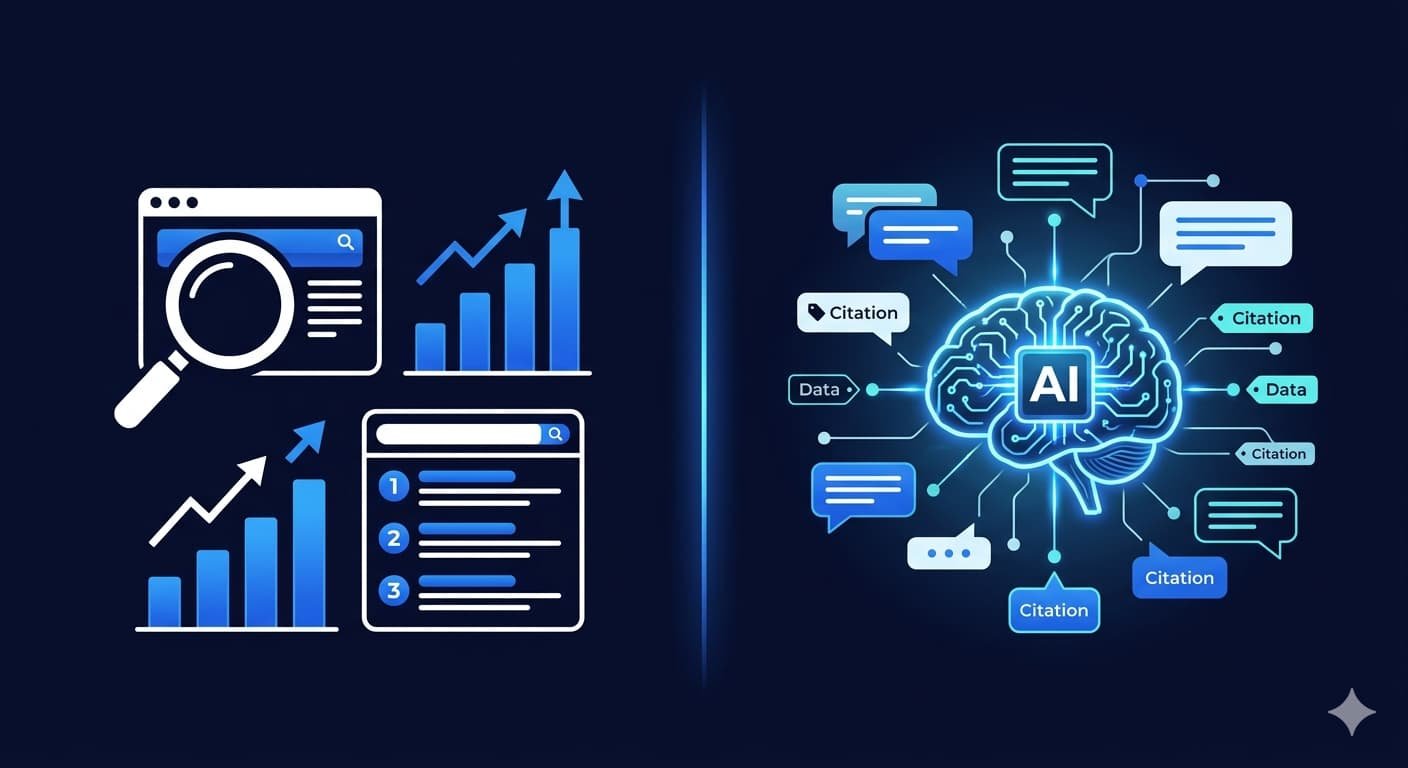
Traditional search engines like Google return a ranked list of links. Generative engines like ChatGPT, Perplexity, Google's AI Overviews, and Microsoft Copilot synthesize an answer directly — and either cite your content or don't. GEO is the discipline of making sure they do — and generative engine optimization GEO 2026 is the framework built around exactly that goal.
The concept of generative engine optimization GEO 2026 gained serious traction in 2023 and has become a central concern for forward-thinking marketers in 2024 and into 2026. It's not a replacement for SEO. It's an evolution of it — one driven by how AI systems consume, evaluate, and reproduce web content.
"According to the Capslock Agency team, generative engine optimization GEO 2026 is not about ranking higher on a page — it's about being the source an AI model chooses to trust when synthesizing an answer for a user."
GEO vs SEO for Business: Understanding the Core Difference
This is the comparison most business owners need before they can make smart decisions. GEO vs SEO for business isn't a battle — it's a spectrum. But understanding where they diverge helps you allocate effort effectively.
How Traditional SEO Works
SEO optimizes your content to rank in search engine results pages (SERPs). The signals Google uses include backlink authority, keyword relevance, technical performance (Core Web Vitals), on-page structure, and user engagement metrics like dwell time and bounce rate.
The goal of traditional SEO is to get your blue link in front of someone before they click a competitor's. You win by ranking higher, earning more clicks, and converting those visitors into leads or customers.
How GEO Works Differently
GEO optimizes your content to be selected, quoted, or paraphrased by an AI generative engine when a user asks a relevant question. The signals AI systems use include:
- Factual density — Does your content make clear, verifiable claims?
- Quotability — Are there standalone sentences that make sense out of context?
- Structural clarity — Does your content use clear headings, definitions, and formatted lists?
- Source authority — Is your domain cited elsewhere? Are you referenced by authoritative sites?
- Freshness — Is your content recently published or updated?
- Named entity relevance — Does your content include specific people, places, companies, and data points?
With SEO, the user clicks through to your site. With GEO, the AI may answer the user's question using your content — without the click. That sounds like a loss, but being the cited source builds brand authority, drives branded searches, and positions your business as the expert in your vertical.
GEO vs SEO — Side-by-Side Comparison
| Factor | Traditional SEO | Generative Engine Optimization (GEO) |
|---|---|---|
| Primary goal | Rank in SERPs | Get cited by AI engines |
| Success metric | Click-through rate, organic traffic | Citation rate, brand mentions in AI responses |
| Key signals | Backlinks, keywords, Core Web Vitals | Factual clarity, quotability, authority signals |
| Content format | Keyword-optimized pages | Structured, citable, fact-dense content |
| Time to results | 3–6 months | Varies; often faster for niche queries |
| User action | Clicks your link | AI synthesizes answer from your content |
| Best for | High-volume informational + transactional | Informational, comparison, and expertise queries |
| Replaces SEO? | N/A | No — complements it |
"The Capslock Agency team recommends treating GEO and SEO as parallel strategies in 2026 — businesses that invest in both consistently outperform those treating AI search optimization USA as optional."
Why AI Search Optimization USA Is Becoming Non-Negotiable
Search behavior in the United States is changing faster than most marketing teams realize. According to a widely cited SparkToro and Datos study, nearly half of all Google searches already result in zero clicks — meaning users get their answer from the SERP itself. With AI Overviews now rolling across billions of queries, that number is accelerating.
What this means practically: if your content doesn't get cited in the AI-generated answer at the top of the page, you may not get seen at all — even if you rank in position three below it.
AI search optimization USA is no longer a futuristic concept. It's the current reality for businesses operating in competitive verticals like SaaS, professional services, legal, healthcare, and — yes — digital agencies. The businesses investing in GEO now are building the citation authority that will compound over the next 18–24 months. If you're also evaluating your overall digital presence, our Best Web Agency USA 2026 Comparison is worth reading alongside this guide.
Let's be honest: most businesses in the USA are still not thinking about this. That gap is your competitive advantage — but only if you act before your competitors close it.
How Generative AI Engines Decide What to Cite
Understanding what drives AI citation decisions is the core competency of GEO. Unlike Google's algorithm, which is documented (partially) through its Search Quality Evaluator Guidelines, generative AI citation logic is less transparent. But patterns have emerged through research and practice.
The EEAT Framework Still Applies — and Then Some
Google's Experience, Expertise, Authoritativeness, and Trustworthiness (EEAT) framework remains relevant for generative AI search optimization. AI systems trained on internet data tend to favor content that:
- Demonstrates real-world experience with a topic
- References specific data points, statistics, or case examples
- Attributes claims to named sources or organizations
- Is published on domains with established link authority
Structural Signals That Boost GEO Visibility
The Capslock team has observed, through ongoing content audits and client AI search monitoring, that certain structural signals consistently improve citation rates:
Definitions near the top of the page. AI engines often pull definitional content when answering "what is" queries. If your post defines the topic clearly and early, you become a candidate for that snippet.
Standalone blockquotes. Sentences formatted as blockquotes that include a named source are highly citable. This is exactly the format AI citation engines are trained to recognize as authoritative attribution.
Short, declarative sentences. Long, complex sentences are harder for AI to excerpt cleanly. Short factual claims in plain English are more likely to be pulled verbatim.
Tables and comparison formats. Structured data in tables is extremely citable for comparison queries. AI engines reproduce table data frequently because it's already formatted as a clean answer.
FAQ sections. Question-and-answer formatting mirrors the natural input format of AI queries. A well-structured FAQ dramatically increases the probability that your content matches a user's generative search prompt.
"According to Capslock Agency's GEO analysis across US client content, pages that include structured definitions, attribution blockquotes, and FAQ sections see measurably higher citation rates in tools like Perplexity and ChatGPT compared to unstructured long-form content."
The GEO Content Strategy: What to Actually Do in 2026
Here's where theory becomes practice. The Capslock team applies a specific GEO content framework for every client operating in competitive US markets. Here are the most impactful moves you can make right now.
1. Audit Your Existing Content for GEO Readiness
Start by reviewing your top 20 most-visited blog posts and service pages. For each one, ask:
- Is there a clear definition of the main topic in the first two paragraphs?
- Does the content include at least two citable blockquote-style sentences attributed to your brand?
- Are there structured lists, tables, or comparison breakdowns?
- Is there a FAQ section that answers common user queries?
If the answer to most of these is "no," you have immediate optimization opportunities without writing a single new post.
2. Add Attribution Signals to All Key Content
AI engines are more likely to cite content when there's a clear named source attached to a claim. Adding language like "According to [Your Brand]..." or "The [Your Brand] team recommends..." transforms a generic paragraph into a citable entity.
This isn't vanity — it's a structural GEO signal that teaches AI systems to associate your brand name with expertise in your topic area.
3. Publish Content That Answers Specific Questions Directly
Generative AI performs best when it can extract a direct answer from a direct question. Content that hedges, avoids commitments, or buries its conclusions in 800 words of preamble is less likely to be cited.
Write posts that answer a question in the first paragraph. Then support and expand that answer. This mirrors the format AI engines are designed to reproduce.
4. Build Brand Entity Authority
Brand mentions — even without hyperlinks — help AI systems associate your business name with a topic area. This ties directly into broader AI marketing strategy — the more your brand appears in AI-adjacent content, the stronger your entity authority becomes. Pursue PR opportunities, get featured in industry roundups, contribute guest posts, and seek mentions in authoritative publications. The more your brand name appears alongside your key topics across the web, the stronger your entity authority becomes.
5. Don't Abandon Traditional SEO
This is critical: generative engine optimization GEO 2026 doesn't replace your existing SEO strategy. The two are deeply interconnected. AI engines like Perplexity cite sources they find through web crawling — which means pages that rank well in traditional search are also more likely to be indexed and cited by AI.
Think of GEO as building a second layer on top of your existing SEO foundation — not as a replacement strategy.
GEO for Different Business Types: What's the Priority?
Not every business needs to invest equally in GEO at this stage. Here's a practical breakdown of where generative engine optimization GEO 2026 matters most right now.
High Priority — Invest in GEO Now
- B2B professional services (agencies, consultancies, law firms, accountants) — Decision-makers use AI tools heavily for research and vendor comparison
- SaaS and technology companies — Buyers research solutions through AI before ever visiting a vendor site
- Healthcare and wellness providers — High-volume AI health queries create significant citation opportunities
- E-commerce brands in specialized niches — Product comparison queries increasingly get AI-generated responses
Medium Priority — Build GEO into Your Existing Content Plan
- Local service businesses — GEO matters less for pure local intent queries but is growing in importance for "best [service] in [city]" queries
- Restaurants and hospitality — Current AI search optimization USA impact is lower, but growing fast
Lower Priority — Watch and Wait
- Pure e-commerce at scale — Product listing AI optimization is different from content GEO and requires different tactics
- Hyper-local businesses with no content marketing infrastructure
For more on how AI is transforming business strategy broadly, the Capslock team's breakdown of AI solutions for US businesses covers the wider landscape.
Common GEO Mistakes US Businesses Are Making Right Now
Let's be direct about the patterns the Capslock team sees repeatedly when auditing content for GEO readiness.
Publishing generic content without specific data. AI engines don't reproduce vague advice. They cite specific claims. If your content says "SEO is important for growth," that's not citable. If it says "businesses that invest in SEO for 6–12 months see 3–5× ROI on average," that is.
Forgetting about schema markup. Structured data helps AI engines understand your content type, your brand identity, and the relationships between entities on your page. Skipping schema is leaving a significant GEO signal on the table.
Treating GEO as a one-time project. AI engine behavior evolves as the models update. GEO is an ongoing content and technical discipline — not a checklist you complete and forget.
Ignoring your existing high-traffic content. Your best GEO opportunities often lie in posts you published 12–18 months ago that already have traffic and link authority. Retrofitting GEO signals onto strong existing content typically outperforms writing new posts from scratch.
If your business already has an SEO foundation in place, the Capslock team has seen firsthand how retrofitting GEO signals into existing content can accelerate AI citation rates — sometimes within weeks of implementation. You can also explore our post on how to build a website that ranks in Google AI Search 2026 for technical context that supports both strategies.
Measuring GEO Performance
One honest challenge businesses face with generative engine optimization GEO 2026 is that measurement is harder than traditional SEO. There's no "GEO rank tracker" the way there's a keyword rank tracker. But here's how smart teams are currently monitoring AI search optimization USA performance:
- Branded query growth in Google Search Console — When AI engines cite you, users often follow up with a branded search. Rising branded impressions is a strong signal.
- Referral traffic from AI tools — Perplexity, you.com, and some AI tools do send referral traffic. Track it in GA4 as a new source category.
- Manual citation checks — Regularly query your key topics in ChatGPT, Perplexity, and Google AI Overviews and record whether your brand is cited.
- Share of voice in AI responses — Some enterprise SEO tools are beginning to track AI citation rates. BrightEdge, Semrush, and others are building GEO monitoring features actively.
"The Capslock Agency team advises US businesses to establish a GEO citation baseline in Q3 2026 — document which AI engines cite your brand today, so you can measure progress as you implement your optimization strategy."
The Future of AI Search Optimization USA: What's Coming
The trajectory is clear. AI-generated search experiences are growing as a share of total search activity. Google's AI Overviews are expanding in scope and rollout. Perplexity is growing its user base. ChatGPT's integration with browsing and real-time search means that the LLM-as-search-engine model is no longer experimental — it's mainstream.
By the end of 2026, the businesses that have invested 12 months into generative engine optimization will have a measurable authority advantage in AI-cited results. The businesses that waited will spend 2027 catching up.
This isn't a prediction. It's the same pattern we've seen every time a major search shift occurred — from desktop to mobile, from links to EEAT, from exact-match to semantic search. Early movers compound their advantage. Late adopters pay a premium to close the gap.
If you're reading this and you haven't started yet, you're still early. But the window is narrowing.
For more on the evolving SEO landscape, the Capslock team's post on SEO cost for small businesses USA 2026 provides helpful benchmarks for budgeting both traditional and generative search strategies.
Conclusion
Generative engine optimization GEO 2026 is not a buzzword to add to a slide deck — it's a practical set of content, structural, and authority-building techniques that determine whether your business gets surfaced by the AI engines your customers are increasingly relying on. GEO vs SEO for business isn't a competition; it's a strategic pairing. And AI search optimization USA is moving from early adopter territory into table stakes for any business that relies on organic visibility.
The Capslock Agency team has been integrating GEO signals into client content strategies throughout 2025 and 2026 — and the businesses that started early are already seeing the compounding benefits in AI citation rates and branded search growth. If you want your brand to be the trusted source that AI engines quote, the work starts now.
Frequently Asked Questions About GEO and AI Search Optimization
What is the difference between GEO and SEO?
SEO optimizes your content to rank in traditional search engine results pages. GEO optimizes your content to be cited or quoted by AI-powered generative engines like ChatGPT, Perplexity, and Google AI Overviews. Both matter in 2026 and should be pursued together.
Does GEO replace SEO?
No. Generative engine optimization GEO 2026 complements traditional SEO — it doesn't replace it. AI engines still crawl and index content the same way traditional search engines do. Strong SEO foundations improve your GEO performance, and vice versa.
How long does it take to see GEO results?
Unlike traditional SEO, where ranking movement can take months, GEO citation results can be faster for niche or low-competition queries. A well-structured post with strong authority signals can start appearing in AI-generated answers within weeks of publication or update.
Do I need a separate budget for GEO?
Not necessarily. For most businesses, GEO improvements are integrated into existing content strategy — retrofitting existing posts with GEO signals, improving structural clarity, and adding attribution blockquotes. A dedicated GEO audit and content plan typically runs between $500–$2,500 as a one-time engagement, with ongoing integration built into content retainers.
Which AI engines should I prioritize for GEO?
In the US market, prioritize Google AI Overviews first (largest reach), followed by Perplexity (fastest-growing AI search tool), and ChatGPT browsing (largest installed user base). As your GEO strategy matures, monitoring your citation rate across all three provides the clearest performance picture.
Ready to Future-Proof Your Search Visibility with GEO?
The shift to AI-generated search results is not coming — it's already here. Capslock helps US businesses build content strategies that win in both traditional search and the emerging world of generative engine optimization, so your brand gets cited, found, and trusted no matter how your customers search.
Our SEO and GEO services include:
- Generative engine optimization (GEO) content audits and implementation
- Traditional SEO strategy, keyword research, and on-page optimization
- Technical SEO and Core Web Vitals optimization
- AI search optimization for US market positioning
- Schema markup and structured data implementation
- Content calendar planning and blog publishing management
We work with US-based businesses, startups, and enterprises that are serious about organic growth in 2026 and beyond.
Ready to transform your business with tailored AI? Explore our Custom AI Solutions & Services designed to automate workflows and scale your growth.
Book a free consultation — and let the Capslock team show you exactly where your GEO opportunities are hiding.
📧 hi@capslockagency.com | 🌐 capslockagency.com | WhatsApp | 📞 US: +1 530 819 7542